


In 2022, the US Supreme Court decided New York State Rifle & Pistol Association v. Bruen. That ruling found that in order to pass Second Amendment muster, a law must be “consistent with the Nation’s historical tradition of firearm regulation.” What that means in practice will be the subject of two Supreme Court cases and multiple Court of Appeals cases in 2026.
In Wolford v. Lopez, the Supreme Court will decide whether a Hawaii law that bans carrying firearms in “sensitive places” (bars, parks, bank, restaurants) is allowed under the Second Amendment. The law changes the default rule to “no guns allowed” unless the property owner posts a sign or gives express consent. The Ninth Circuit upheld the law. The Supreme Court will have to balance gun rights and private property rights in a case likely to set precedent for states like California that have similar laws. In US v. Hemani, the Supreme Court will address the constitutionality of a federal law that forbids a person from possessing a firearm in or affecting commerce if he “is an unlawful user of … any controlled substance.” At issue is the law's scope – does it forever prohibit someone who was an unlawful controlled substance abuser from owning or possessing a firearm, or does it only temporarily disarm these individuals while they are under the influence or dealing with addiction?
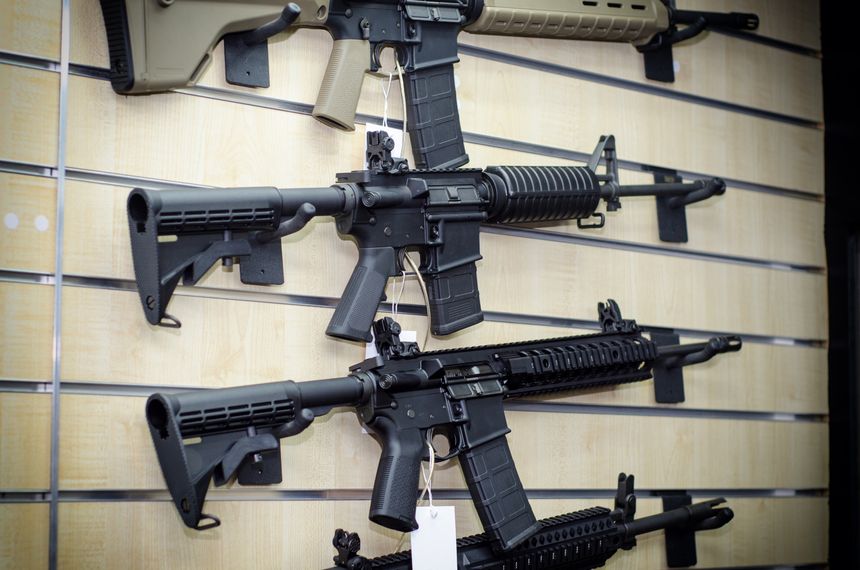
At the Court of Appeals level, expect decisions on assault weapons and waiting periods from a number of Circuits. While federal appeals courts are currently united in upholding bans on assault-style firearms such as the AR-15, that could be challenged in 2026. The Ninth Circuit upheld a ban on machine guns and is expected to validate California's assault-weapons ban. The Seventh Circuit may also soon decide whether Illinois sweeping prohibition is illegal. In the Third Circuit, a challenge to New Jersey’s AR-15 ban might be the first final appellate decision that strikes down an assault weapons ban. Supreme Court review will almost certainly be sought in these cases. Waiting periods for gun purchases were “universally upheld” until recent decisions in the District of Maine and the Tenth Circuit. The decision in Bruen has required lower courts to perform a historical analysis of the validity of these laws. This again will almost certainly result in a case where Supreme Court review will be sought.
There is no question the Second Amendment is a foundational principle in the Constitution. Its parameters will be one of the more interesting legal issues I expect to be addressed in 2026.
/Passle/5f6edd8e8cb62a0bec3e5fd2/SearchServiceImages/2025-09-11-17-02-51-670-68c300bb2b4d83f984228268.jpg)
/Passle/5f6edd8e8cb62a0bec3e5fd2/SearchServiceImages/2026-01-19-20-28-26-817-696e93ea51247f0ed09a8550.jpg)
/Passle/5f6edd8e8cb62a0bec3e5fd2/SearchServiceImages/2026-01-19-21-22-25-666-696ea09151247f0ed09ad266.jpg)
/Passle/5f6edd8e8cb62a0bec3e5fd2/SearchServiceImages/2026-01-21-14-07-56-923-6970ddbcaf056dbfb5d26a96.jpg)